Life Concern to Establish Traditional Seed Bank in Zombo to Preserve Indigenous Crops and Strengthen Food Security.
By Mike Rwothomio
Life Concern (LICO) is set to establish a traditional seed bank in Zombo District as part of a wider effort to protect indigenous crop varieties and strengthen climate-resilient food systems.
The intervention is part of the organisation’s Stand for Climate Justice (SCJ-11) Project, a two-year environmental and climate resilience initiative running from May 2026 to May 2028.
The project will be implemented in Nyapea Sub-county and Paidha Town Council and will support communities to protect natural resources while strengthening their ability to adapt to climate change.
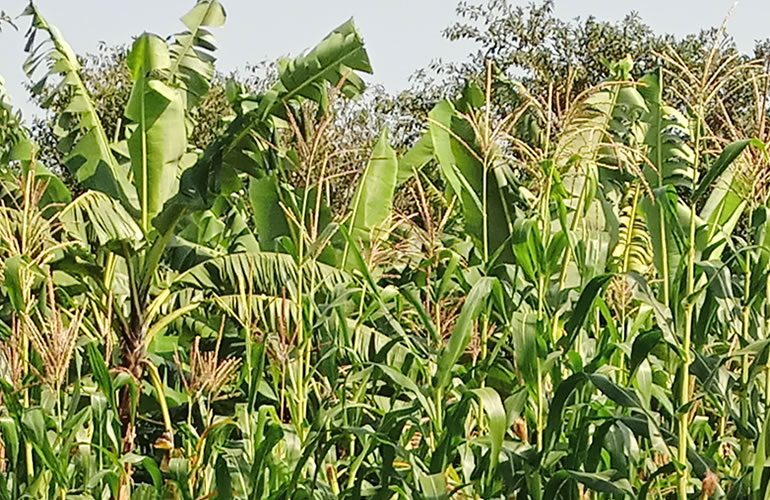
A major component of the initiative is the preservation of indigenous agricultural biodiversity through the identification, documentation and conservation of traditional seed varieties.
Preserving Indigenous Seeds
As farming communities face changing weather conditions, environmental degradation and growing pressure on food systems, the preservation of locally adapted seed varieties is becoming increasingly important.
LICO plans to conduct a three-month inventory and documentation exercise to identify indigenous seed varieties found within the target communities.
The information collected will support the establishment of a LICO-managed traditional seed bank.
The organisation will also train staff and selected community representatives in seed conservation, propagation and management.
The initiative is expected to create a system for preserving important indigenous crops and ensuring that knowledge about traditional seed varieties is not lost.
Learning From Established Seed Banks
During the second year of implementation, LICO plans to organise a learning and benchmarking visit to established seed banks.
The visit will allow project participants to learn from existing conservation models and identify practical approaches that can be adapted to the local context in Zombo District.
Following the learning visit, the project will move towards establishing and equipping the traditional seed bank.
A management framework will also be developed to guide how the seed bank is operated, maintained and accessed.
LICO says the initiative will contribute to stronger agro-biodiversity and more resilient local food systems.
Climate Change and Food Security
LICO Executive Director Kakura Emmy Kizito said climate justice requires supporting communities that are experiencing the effects of climate change despite contributing little to the factors driving global warming.
He said the protection of indigenous seed varieties, water sources and ecosystems can help communities protect their livelihoods and prepare for environmental challenges.
The Stand for Climate Justice Project will implement 13 community-based interventions covering environmental conservation, climate awareness, water-source protection and agricultural biodiversity.
In addition to seed conservation, the project will organise community mobilisation meetings and climate and environmental awareness programmes through radio dialogues.
Continuous monitoring, evaluation and documentation will also be conducted throughout the two-year project.
Building on Previous Community Work
The seed bank initiative forms part of LICO’s wider work in environmental protection, education, livelihoods and community development.
The organisation has previously supported ecosystem restoration and tree planting in Zombo District and the wider West Nile region.
LICO has also supported education retention and vocational training through initiatives such as the Life Concern Skilling Centre in Paidha Town Council and the Aloci ku Somu, meaning “Winners with Education,” project.
These programmes support young people through education, vocational training and the provision of start-up kits to graduates.
LICO also works with partners on accountability and education initiatives, including activities implemented through the TRINITY consortium alongside other civil society organisations.
Stakeholders Call for Community Ownership
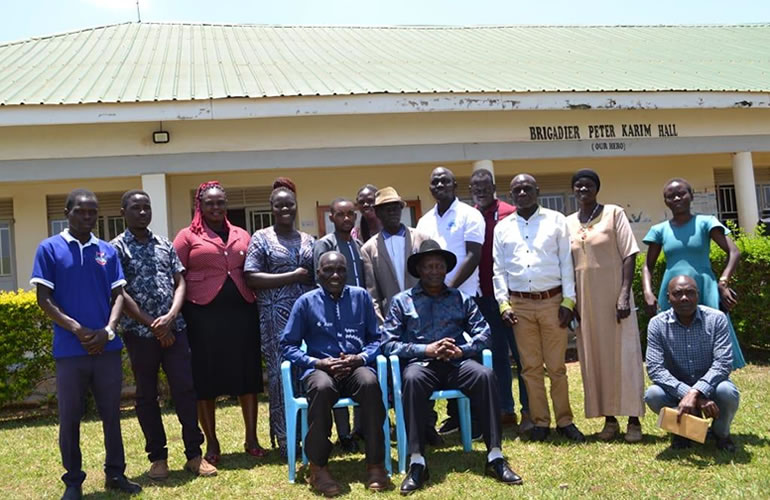
Stakeholders who attended the launch and project presentation welcomed the initiative and emphasised the importance of community participation.
Local leaders called for greater awareness and mindset change to ensure communities understand the value of protecting their natural resources and agricultural heritage.
Walter Ongiera, the Senior Community Development Officer in Zombo, encouraged LICO and its partners to hold regular review meetings and maintain direct engagement with beneficiary communities.
The establishment of a traditional seed bank could provide an important platform for protecting local agricultural knowledge while supporting efforts to build stronger and more climate-resilient food systems.
As the effects of climate change continue to place pressure on agriculture and rural livelihoods, LICO believes that preserving indigenous seeds could become an important part of protecting food security for future generations.
Through the Stand for Climate Justice Project, communities in Zombo District are being encouraged to see environmental conservation, water protection and agricultural biodiversity as interconnected parts of a sustainable future.
Stakeholders pose for a photograph following the launch of the Stand for Climate Justice Project at Zombo District headquarters on Friday, August 28, 2026.